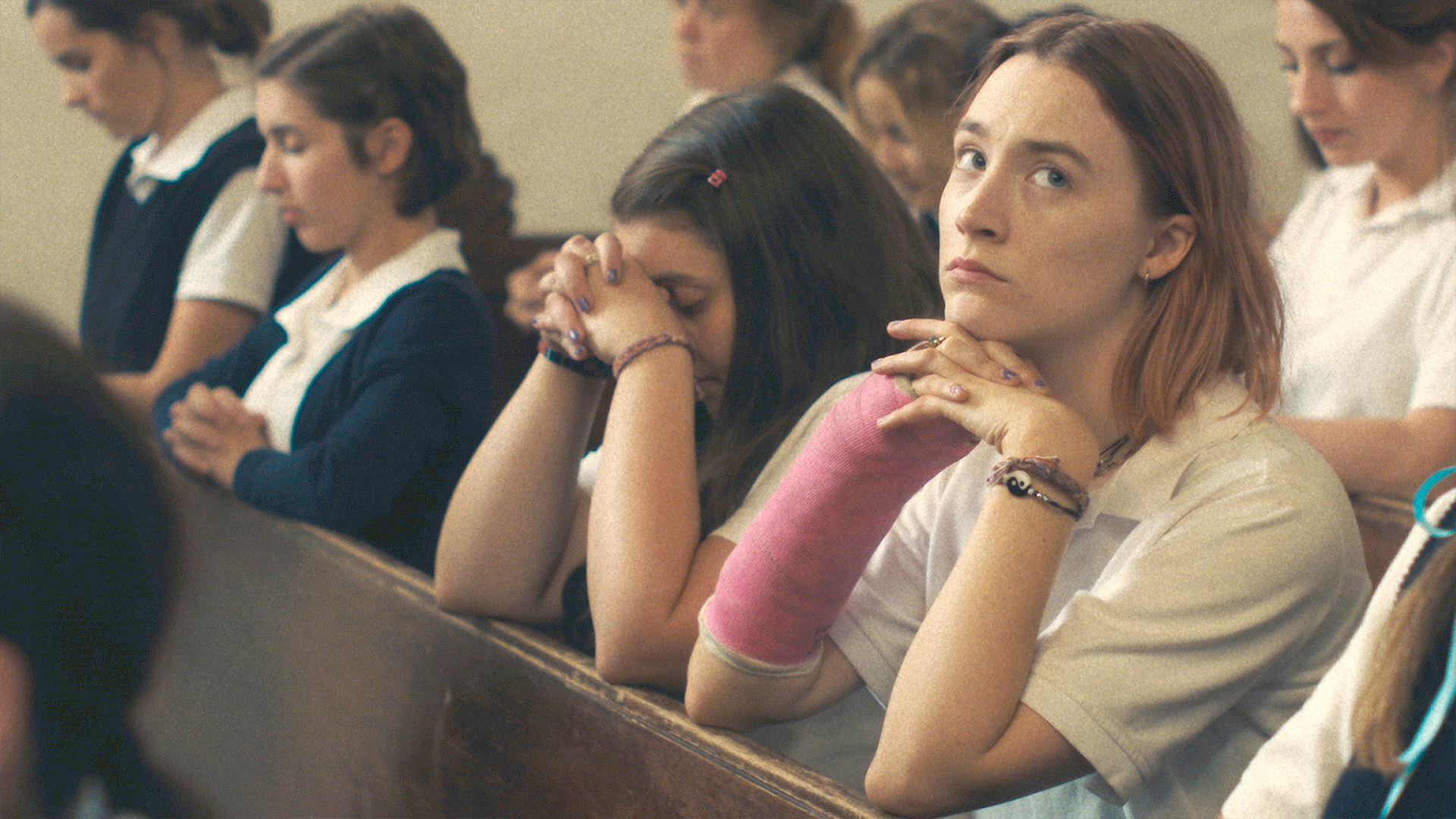
This darling of modern teen cinema caters almost flawlessly to the general experience of its audience by faithfully recounting the specific experience of its director.
Greta Gerwig was born and raised in Sacramento, California. In 2002, she graduated from an all-girls Catholic high school before her parents (including her mother, a nurse named Christine) financed her college education in New York. Her solo directorial debut is not an autobiography, but it’s damn close. Beyond the easy clues from her Wikipedia page, it’s not difficult to recognize Gerwig’s projection of her own adolescence onto Christine “Lady Bird” McPherson, in the tradition of therapeutic, diary filmmaking familiar to a mumblecore specialist like her.
Crammed within Lady Bird‘s scant runtime is the entirety of the Official High School Senior Experience. Getting cast in the fall musical; clashing with your parents over your post-secondary education; being humiliated by the lack of effort made by one of your first partners; drifting apart from close friends only to reunite with them consequence-free on prom night. It’s a watershed year for a graduating young adult, and its struggles are defined by the tension between the fear of setting out to face the firestorm of adult responsibilities and the ever-present necessity to be independent. Her story is the story of high school seniors — the fight to define oneself straining every close relationship on the imposed course to maturity. This, at a time when you’re not yet ready to assess the risk posed by irresponsible decision-making, to stop being tied to your parents’ finances, and for Lady Bird especially, to stop being mothered.
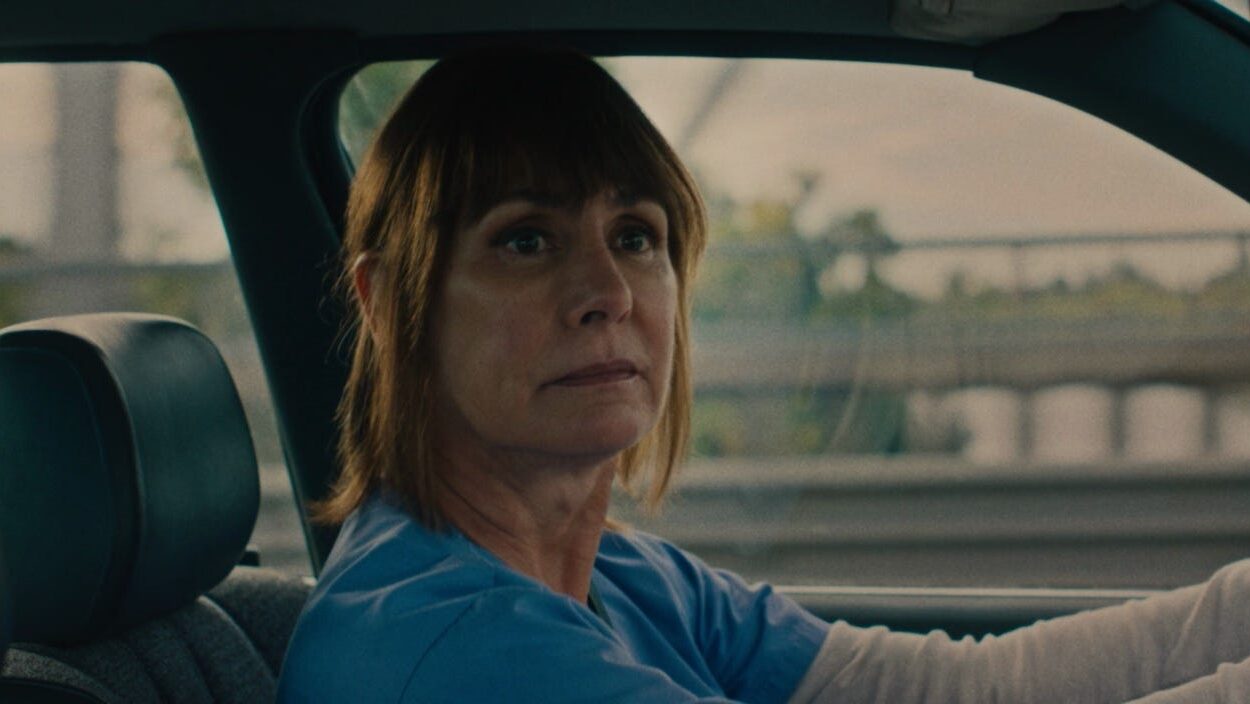
The key to Marion — Lady Bird’s staunch, jaded mother — is the scene where her daughter, frantically trying on prom dresses, comes out of the dressing room beaming at her selection; “I love it,” she says to the mirror, her mind already made up. Marion, with an earnest and questioning grimace, immediately asks, “Is it too pink?”
Her brutal honesty and lack of a filter for comments which upset her daughter (a category of everyday remarks that she sometimes knows are passive-aggressive, sometimes not) are the measure of how much she seeks to instill in her practical expectations for life. You cannot go as far as to say that she has no nurturing qualities, or even that it should be our expectation that she is a flawlessly caring presence in Lady Bird’s life given her position as the breadwinner of the household and the parent to at least two others living there (three, if we are to infer that an emasculated, repressed husband requires the same sort of maternal support as his children). But tough love is a burden that the insecure cannot bear.
Lady Bird is offended by her mom’s dismissal of a flashy dress choice, and explodes into the sometimes-unspoken rage of someone desperately reaching for the parental validation they never receive, hiding in the dressing room again: “I wish that you liked me,” we hear from behind the door. An exasperated “Of course I love you…” escapes Marion. “But do you like me?” — this, she can’t answer.
It is this dynamic that motivates the whole film. Marion casts a shadow on her daughter’s little white lies, her rebellion, and her wandering self-discovery even when she is not onscreen. Everything Lady Bird does is a response to the expectations imposed upon her by her harshly pragmatic mom (based on the family’s economic reality), and undermined by a relenting dad used to being passive in his middle age.
I’ve been talking a lot about the economic aspect of parental independence, the thing Lady Bird is chasing after by, ironically, asking favours from her father to fill out scholarship documents for her expensive higher education ambitions. Eventually, he even goes the extra mile by refinancing the family home. This foundation to Lady Bird’s fraught relationship with her mother, domestic financial anxieties, makes me lose the movie just a bit. It makes her ascension to artistic life as a college student, the film’s conclusion, seem consequence-free. The McPherson family is ‘poor’ — this is insisted, but it does not come across — and yet the structure of the movie dictates that when her dad scrounges up all the money he can to fulfill a fantasy of acceptance into a good university, that is all the conclusion can be: a fantasy. Unseen are the many more years spent paying everything off. Maybe I’m asking for a different movie altogether when I say I want the incurrence of this debt to matter, but if it doesn’t, it reflects the image of privilege Greta Gerwig portrays onscreen.
Lady Bird‘s universality begins to ring false when we’re suddenly whisked away to college, all complicated feelings unexpressed, all pain forgotten. Even Lady Bird’s voicemail to her mom feels too forgiving, and her re-adoption of the name “Christine” comes across as a death, not a maturation. The ending montage of Sacramento shots is unmoving when there is such a disconnect between the city and this movie (which has, thus far, felt like it could take place anywhere). It’s as if Greta Gerwig’s personal ending, the one that she did experience, invades the potential for a broadly relatable one. You take a flight to NYC, gain respect in its cultural hubs as a widely celebrated multi-hyphenate, and your childhood is over just like that. A withering nostalgia.
No coming-of-age story which respects the growth experienced by its protagonist should view the adolescent past as inferior to the adult present.