Rob Reiner directs this courtroom drama with eager intensity, yet the screenplay misfires when faced with opportunities to challenge American patriotism.
In politics, Aaron Sorkin is almost laughably naive; in each of his politically focused films, there’s always an underlying belief that America’s problems are somehow a corruption of an otherwise great nation, as though the struggles portrayed in his scripts are isolated incidents rather than the norm. This has been a problem throughout the man’s career, but the most blatant example of it is the insulting climactic line provided by Sacha Baron Cohen at the end of The Trial of the Chicago 7:
I think the institutions of our democracy are wonderful things, that right now are populated by some terrible people.
Unfortunately, A Few Good Men is no different. Though it essentially criticizes the bullshit justifications given for reprehensible actions (Nicholson repeatedly spouts out gibberish about protecting his country and saving American lives), the American values of doing what you’re told, serving your country, and the idea that modern American wars do actually save lives go unchallenged, and are actively reinforced. A more intelligent screenplay would use this story to address those flawed mentalities, but Sorkin doesn’t have the emotional maturity to escape his idealist reverie of what America is (not to mention that he wouldn’t be able to write a female character if it kept him from being dishonorably discharged).
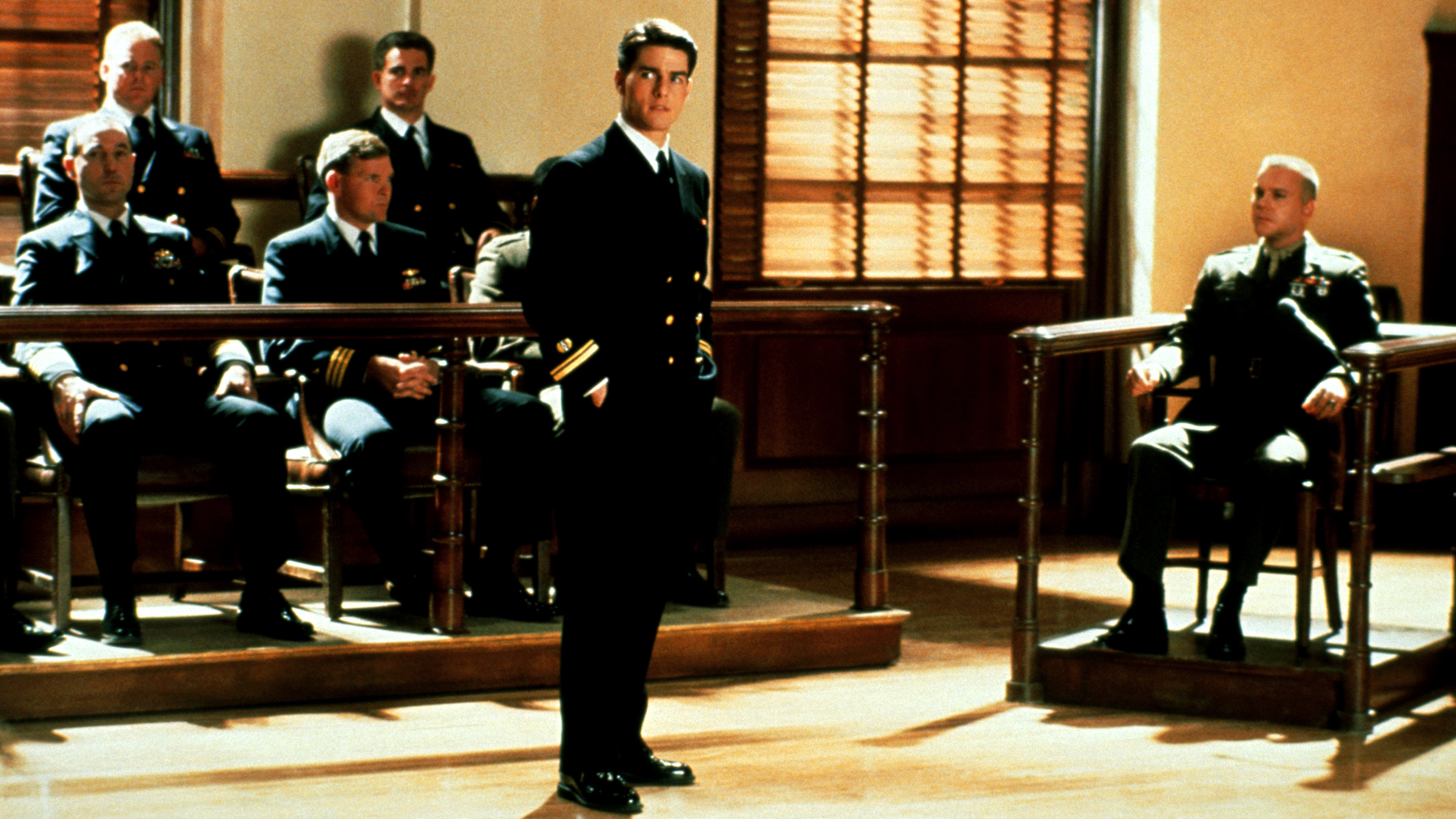
However, even with such a misguidedly patriotic screenplay, the film manages to break out of being insufferable with basically every other element. Rob Reiner’s direction communicates the necessary intensity in heated emotional moments, and a lawyerly shrewdness during courtroom scenes; an effective visual parallel to the dynamics at play that could’ve gone completely missing in the hands of a lesser director (*cough* Sorkin *cough* Trial of the Chicago 7 *cough cough*). Furthermore, Tom Cruise and Jack Nicholson demonstrate masterful performances throughout the runtime, giving their respective characters additional depth through simple facial expressions and mannerisms, culminating in the iconic final cross-examination. Had these elements been used on a thematically rich screenplay, this could very easily become a five-star film, as well as a true classic, but sadly, the film rests ultimately forgotten in a slew of deceitful patriotism, only vaguely recalled in pop culture because of ‘that one line’ and a handful of Jack Nicholson smirks.